

As the race within the artificial intelligence sector intensifies, companies are continually innovating to create more efficient and cost-effective solutions. One of the pivotal strategies gaining traction is AI model distillation, a technique that enables the simplification of model complexity without significantly sacrificing performance. This trend is reshaping how AI firms compete, focusing on producing affordable AI models that can be deployed across various industries. Through practitioner insights and advancements, this article delves into the nuances of model distillation, highlighting its implications, applications, and the competitive landscape it is creating among industry leaders.
The technology landscape is evolving, with companies like Google and OpenAI adopting machine learning distillation as a means to enhance model efficiency and reduce operational costs. The migration towards smaller, optimized models is evident, especially as firms aim to decrease the computational load associated with deploying complex algorithms. The strategic execution of model optimization strategies not only propels a firm’s competitive stance but also accelerates technological advancements. Understanding the dynamics of this competitive sprint is crucial for both startups and established players in the AI space.
The Mechanics of AI Model Distillation
AI model distillation is a process that involves transferring knowledge from a large, complex model (often referred to as the teacher model) to a smaller, more efficient one (the student model). The primary goal is to create a model that retains the teacher model’s performance while significantly reducing its size and computational demands.
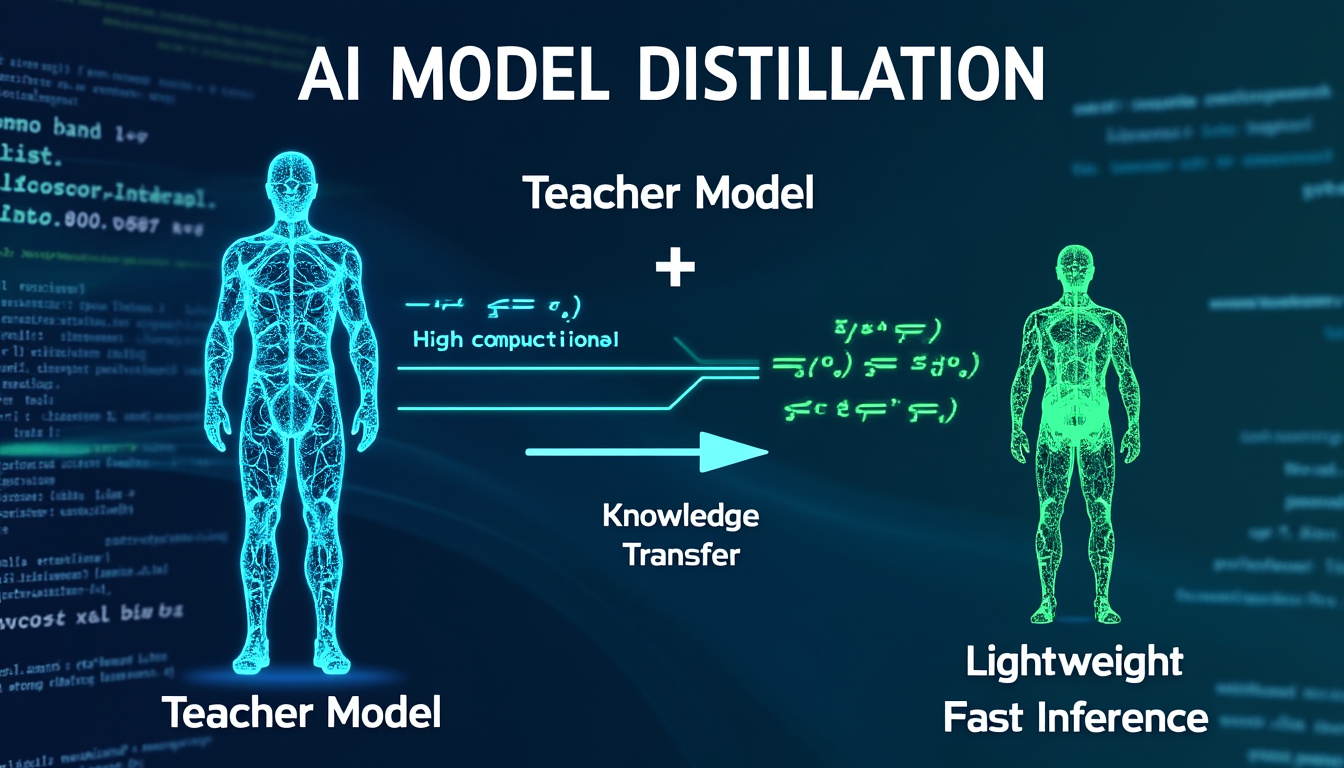
Understanding Distillation Techniques
Various techniques are employed in the distillation process. These include feature extraction, where the smaller model learns to mimic the vital outputs of the larger model, and direct optimization approaches that refine the smaller model through iterative adjustments based on teacher model feedback. Each technique has its strengths and may be more suited to specific applications depending on the task complexity and data characteristics.
A pivotal aspect of deep learning distillation techniques is their role in improving the performance-to-complexity ratio of AI models. By utilizing high-quality training data effectively, organizations can develop affordable AI models that democratize access to advanced AI solutions. This is particularly relevant in sectors like healthcare, finance, and retail, where performance can lead to improved decision-making and operational optimizations.
The AI firms competition is multifaceted, with tech giants investing heavily in research and development to harness the power of model distillation. This strategic focus not only drives advancements in AI capabilities but also expands the market for these technologies, as firms seek to leverage AI for competitive advantage.
Real-World Applications and Case Studies
The impact of model distillation can be observed across numerous industries. For instance, in healthcare, AI has been pivotal in diagnostics, allowing practitioners to leverage data-driven insights swiftly. Distillation provides the framework to deploy these AI solutions effectively, enhancing both speed and accuracy without the overhead of large-scale computational resources.
Transforming Industries Through Distillation
A case study of the pharmaceutical industry demonstrates how AI, bolstered by NVIDIA AI model innovation, is revolutionizing drug discovery. By employing distilled models, companies can simulate complex biological interactions more cost-effectively, enabling faster iterations in drug testing and reducing time-to-market for new treatments.
Moreover, retail businesses increasingly turn to AI to optimize inventory management and enhance customer experience. Using distillation techniques, firms can implement AI solutions that analyze customer behavior and stock levels, ensuring that businesses remain agile in an ever-changing market. The benefits of such applications extend beyond profit margins; they foster innovation, allowing for more sustainable practices.
The intersection of AI and practical applications has spawned a wave of interest, with startups leveraging these distillation techniques to carve out niches in the market. The competitive landscape is reshaping, prompting established firms to rethink strategies to maintain their edge.
The Competitive Landscape Shaped by Distillation
As AI firms race to enhance their offerings, the implications of AI cost reduction through distillation are profound. Startups equipped with optimized models can challenge industry veterans, pushing the limits of innovation and forcing traditional technologies to adapt or evolve.
Market Implications and Future Directions
The ongoing developments highlight the emerging trends and the shifting competitive dynamics within the sector. Companies like Google and OpenAI are at the forefront, implementing aggressive optimization strategies to maintain market leadership. By integrating distillation into their workflows, these firms can lower operational costs while improving performance metrics which is key in an environment characterized by rapid technological evolution.
Furthermore, the implications extend to investor interest, as the effectiveness of distilled models presents promising opportunities for funding and collaboration. The market dynamics showcase increased investments focused on AI model innovation, fueling research that not only enhances output quality but also positions businesses advantageously in their sectors.
Conclusion: Embracing the Future of AI through Distillation
The future of AI is tethered significantly to efficient model design, and AI model distillation plays an instrumental role in this evolution. By enabling firms to create smaller, more capable models, it encourages competition and innovation across the board.
As businesses continue to explore the potential of AI, leveraging machine learning distillation will likely remain a critical strategy. Industry leaders must prioritize understanding this paradigm to navigate a landscape increasingly defined by technological agility and operational efficacy. The ground is being laid for a new era where smarter, more efficient AI solutions will drive industries forward, shaping the future of technology in impactful ways.