
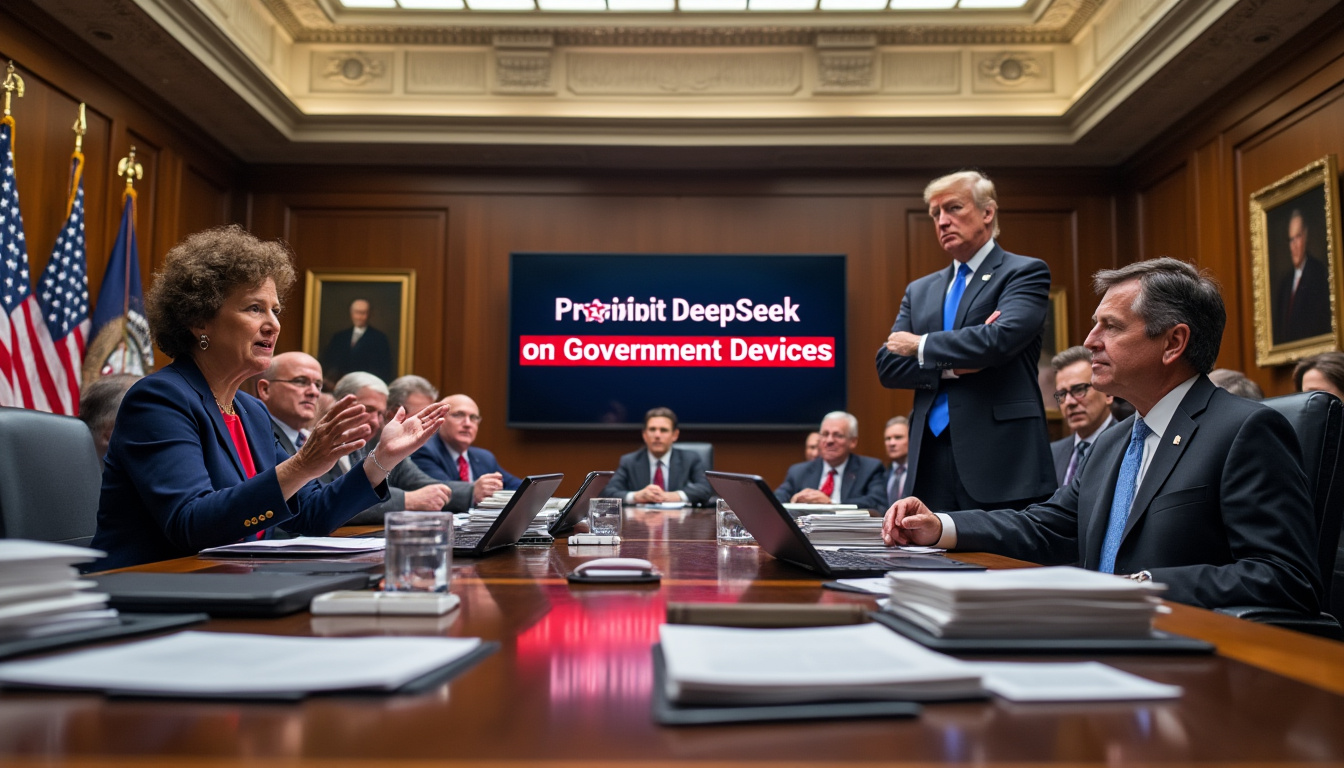
As technology races forward, concerns regarding data security and privacy continue to mount, particularly with the emergence of foreign applications like DeepSeek. Recent developments have prompted bipartisan congressional leaders to step in, urging state governors to take decisive action. This collaborative effort between representatives Josh Gottheimer and Darin LaHood highlights the escalating unease surrounding DeepSeek, a Chinese-made artificial intelligence application that poses significant risks to data integrity and national security. By advocating for the prohibition of DeepSeek on government devices, these leaders aim to safeguard sensitive information from potential foreign exploitation.
This call to action is not isolated, as various states, including Texas and New York, have already instituted bans on DeepSeek. The move towards stricter regulations is compelling, emphasizing privacy concerns amid ongoing conversations about global cybersecurity and data protection. With these legislative measures, state governors are encouraged to align with federal recommendations to bolster governmental security against emerging technological threats.
The Rise of DeepSeek and Emerging Concerns
The introduction of DeepSeek as an AI application has attracted immense scrutiny due to its potential implications for cybersecurity. The app allows users to interact with a chatbot that has raised eyebrows due to the underlying code that may lead to unauthorized data transfers. Reports indicate that this code could route user login information to the state-owned Chinese telecommunications entity, China Mobile, raising alarms among U.S. lawmakers.

Understanding the Risks of DeepSeek
The concerns surrounding DeepSeek are not unfounded. It has been confirmed that the app stores user data on servers located in China, feeding fears that it may be used by the Chinese Communist Party (CCP) to acquire sensitive data from American citizens. Gottheimer and LaHood emphasize that utilizing such an application could compromise national security by providing adversaries with access to crucial governmental information. The ongoing debate around DeepSeek brings to light the broader context of international tech relationships and their consequences on privacy rights within the United States.
Bipartisan Action: A Unified Front Against DeepSeek
Around the nation, bipartisan leaders have come together to confront the threats posed by DeepSeek. The letter penned by Representatives Gottheimer and LaHood represents a significant push toward establishing legislative measures aimed at prohibiting DeepSeek usage on governmental devices. Their initiative gets additional backing from other politicians concerned about the ramifications of foreign apps on domestic security.
Legislative Gains in Response to National Security Threats
The driving force behind this bipartisan coalition seeks to secure bipartisan legislation which would not only ban DeepSeek at the federal level but also encourage individual states to adopt similar measures. By reaching out to 47 state governors and the mayor of Washington, D.C., they are actively promoting the message that data privacy and security need to be prioritized. The urgency of this situation is captured in their warning that failure to act might leave sensitive information vulnerable to exploitation.
State Executive Responses to DeepSeek Implementations
Already, states like Texas, New York, and Virginia have made strides to ban DeepSeek’s use on state government devices, further reflecting a growing consensus of rejection against potential cybersecurity threats posed by foreign applications. With the implementation of these bans, state executives are sending a clear message of resistance to data privacy concerns that accompany DeepSeek.
Advocacy and Repercussions of Inaction
The ramifications of failing to address the risks associated with DeepSeek could be detrimental. By ignoring the bipartisan plea, state governors might inadvertently expose sensitive data related to personal, state, and federal information, ultimately compromising national security. The implications of this technology stretch far beyond a single app, weaving into a broader narrative of the security landscape amidst rising tensions between global powerhouses.
Public Perception and Awareness of Privacy Concerns
The public awareness concerning data protection and cybersecurity has grown tremendously in recent years. As entities like the CCP continue to exploit technology for surveillance and manipulation, Americans are becoming increasingly cautious about the applications they use daily. The movement against DeepSeek serves as a crucial example of transitioning from a passive to an active stance on privacy rights.
| State | Current Status on DeepSeek Usage | Ban Implementation Date |
|---|---|---|
| Texas | Banned | January 2025 |
| New York | Banned | February 2025 |
| Virginia | Banned | February 2025 |
The Impact of Legislative Measures on Public Consciousness
As the emergence of these bans makes headlines, discussions surrounding data privacy are amplified across media platforms. Various news channels report extensively on the implications of allowing apps like DeepSeek on government devices, raising awareness among the electorate and thereby influencing public opinion. The strong bipartisan collaboration on this issue underscores the importance of protecting American citizens from potential threats posed by foreign technology.
Local and National Collaboration on Data Protection Standards
The legislative efforts to prohibit DeepSeek highlight the necessity of collaboration between local and national entities to establish data protection standards that can withstand technological encroachments. By fostering partnerships among state governors, congressional leaders, and technology experts, the aim is to create a robust framework that prioritizes citizen protection and security in an ever-evolving digital landscape.

Future Directions for Cybersecurity Legislation
The trajectory of cybersecurity legislation remains fluid, with representatives continuously revisiting existing policies to adapt to the challenges presented by emerging technologies. The ongoing efforts to prohibit DeepSeek represent a critical reflection on the evolving nature of international relations and the interplay between technology and national security. Collaboration among bipartisan leaders and actionable state policies will shape the future of cybersecurity in an increasingly interconnected world.