
The field of artificial intelligence is rapidly advancing, and two significant players in this arena are DeepSeek and OpenAI. This article dives into the crucial distinctions between their respective APIs, highlighting aspects such as performance, costs, capabilities, and ideal use cases. Businesses often find themselves at a crossroads, deciding on the best technology to fulfill their needs, making it essential to understand the nuances between these APIs. The comparison is not merely academic; it has practical implications for organizations looking to enhance their operations with AI-driven solutions.
DeepSeek API Overview
The DeepSeek API is known for its cost-effective solutions and robust functionalities. Targeted primarily at developers and businesses that require specialized AI capabilities, it stands out due to its high token capacity and rigorous performance in specific areas.
Key Features of DeepSeek API
- Token Capacity: Supports 128k tokens, allowing it to handle extensive input data effectively.
- Affordability: DeepSeek’s API offers lower operational costs compared to OpenAI’s offerings, making it attractive for startups and SMEs.
- Performance: Delivers impressive results for tasks involving mathematics, programming, and data summarization.
For example, businesses requiring analysis of long documents or extensive datasets can rely on the DeepSeek API for efficient processing and accuracy.
OpenAI API Overview
The OpenAI API represents a benchmark in the field of artificial intelligence, known for its advanced models like GPT-4. These models provide quick responses and are equipped with sophisticated functionalities, including voice interaction and multilingual support.
Key Features of OpenAI API
- Speed: Known for rapid response times, making it suitable for real-time applications.
- Multilingual Support: Capable of processing requests in various languages, addressing global user bases.
- Voice Interaction: Facilitates hands-free applications, enhancing user experience and accessibility.
The OpenAI API is ideal for businesses looking for versatile AI tools for customer service, content generation, or interactive applications.
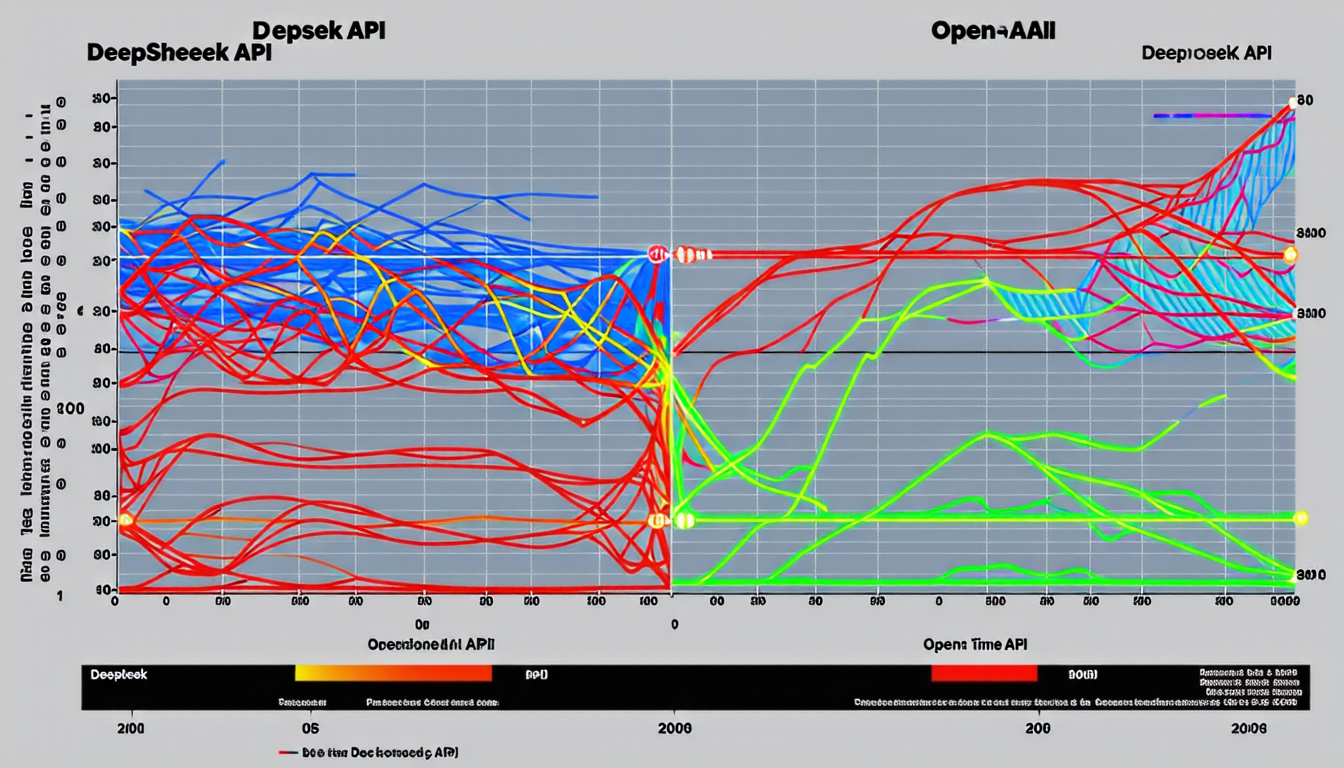
Cost Comparison between DeepSeek API and OpenAI API
Cost is a significant factor when choosing between AI solutions. The DeepSeek API is notably cheaper, with R1 being two times less expensive and V3 five times cheaper than comparable OpenAI models. This financial edge positions DeepSeek as an appealing choice for users operating on tight budgets.
Detailed Pricing Analysis
| Model | Cost per million tokens | Use-case Examples |
|---|---|---|
| DeepSeek R1 | $0.14 input, $0.28 output | Data Analysis, Summarization |
| OpenAI GPT-4 | $2.50 input, $10 output | Customer Support, Content Creation |
This pricing framework indicates that organizations with limited resources can find more suitable options within the DeepSeek ecosystem without sacrificing performance.

Capability Comparison
Evaluating the capabilities of both APIs reveals clear strengths and weaknesses. The DeepSeek API excels in tasks requiring deep technical understanding, such as coding and mathematical problem-solving. On the other hand, the OpenAI API shines in creativity and flexibility, where it excels in generating human-like text.
Use-cases for DeepSeek
For instance, a software development firm might leverage DeepSeek’s excellence in coding to troubleshoot and debug their applications effectively.
Use-cases for OpenAI
Conversely, a marketing agency might utilize OpenAI for generating catchy slogans or engaging product descriptions, showcasing its creative prowess.
Latency and Speed Considerations
While the DeepSeek API has its strengths, it does have a slower response time averaging around 970ms. In contrast, the OpenAI API is recognized for its faster processing, particularly valuable for real-time interactions with users.
Where Speed Matters
A retail company managing customer inquiries could significantly benefit from OpenAI’s rapid response capabilities, providing quicker answers to customer questions and improving overall service experience.
When Latency is Acceptable
In contrast, businesses engaging in extensive data analysis might find DeepSeek’s latency acceptable in exchange for its cost-effectiveness and detailed processing.
Multilingual Capabilities
Multilingual support is a critical factor for businesses operating globally. The OpenAI API boasts superior multilingual capabilities, allowing it to handle various languages seamlessly, making it preferable for international applications.
DeepSeek’s Language Limitations
The DeepSeek API primarily focuses on English and Chinese, which may limit its utility for businesses seeking to cater to a diverse audience. However, it performs exceptionally well in its supported languages, making it a strong choice for localized operations.
OpenAI’s Global Reach
For a company looking to expand its market reach, OpenAI’s multilingual support would enable effective customer interactions across different languages and cultures.
Customizability and Flexibility
Customizability is another factor worth evaluating. The DeepSeek API is open-source, providing transparency and the potential for extensive customization. This is beneficial for businesses that require tailored solutions instead of a one-size-fits-all model.
OpenAI’s Proprietary Model
In contrast, OpenAI operates on a proprietary model with less flexibility in customization options, but it compensates with highly polished features and stability.
Choosing the Right Fit
Ultimately, businesses needing a tailored solution may find DeepSeek’s flexibility advantageous, while those who prioritize a refined user experience might opt for OpenAI’s more established offerings.
Conclusion and Recommendations
The comparison between the DeepSeek API and the OpenAI API illustrates that both platforms have distinct strengths catering to different business needs. Organizations should carefully assess their requirements—from cost to performance and multilingual support—before making a decision. For businesses focused on budget, extensive document analysis, and customization, DeepSeek offers a compelling option. Alternatively, for those emphasizing real-time interaction, language versatility, and advanced features, OpenAI may be the preferred choice.