
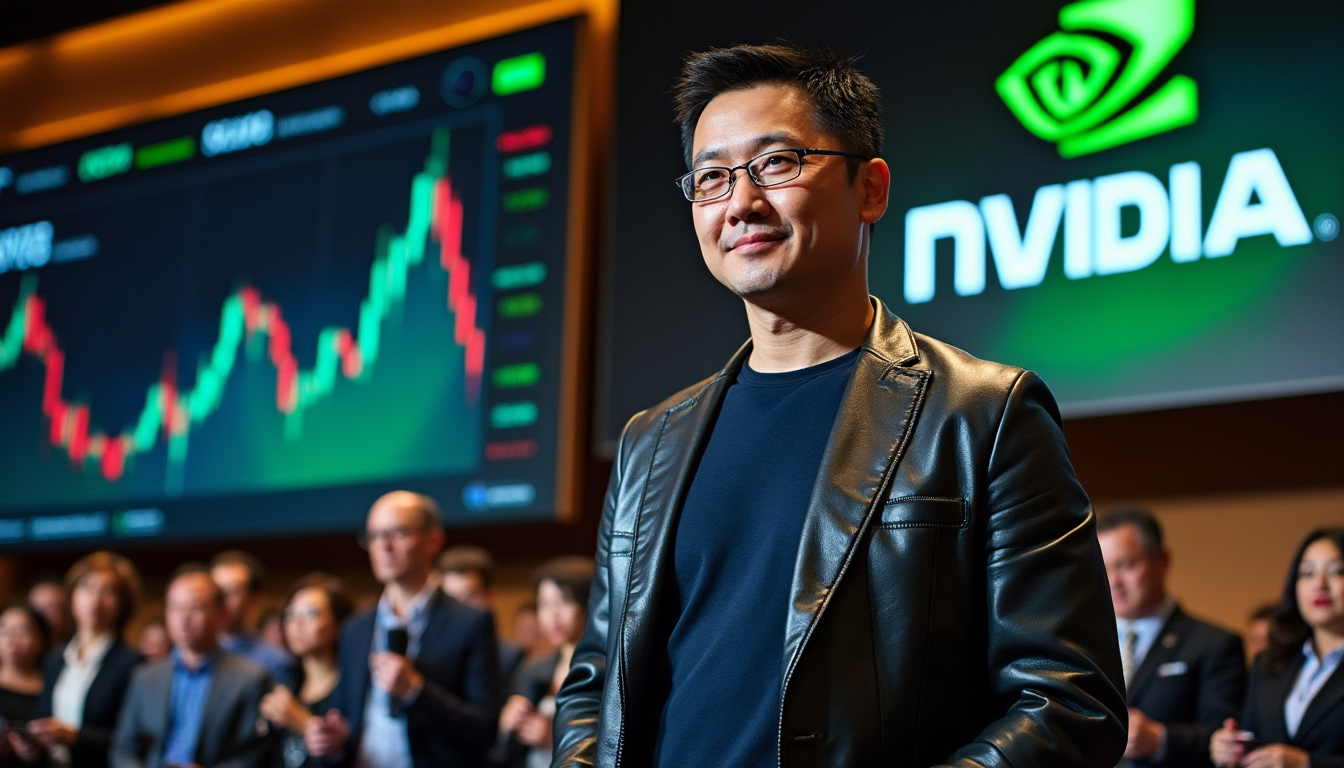
The recent turmoil in the technology stock market, particularly around Nvidia, has raised significant concerns among investors and industry watchers alike. Jensen Huang, the CEO of Nvidia, found himself in the spotlight as the company faced a substantial stock decline linked to developments from the emerging AI firm, DeepSeek. Investors reacted sharply to the announcement of DeepSeek’s new AI advancements, which relied on less powerful chips compared to Nvidia’s state-of-the-art technology. This led to an unprecedented drop in Nvidia’s market value, causing Huang to experience a personal net worth plummet. Throughout various events, he emphasized that many investors misinterpreted the implications of DeepSeek’s AI capabilities, urging a reassessment of the prevailing market narratives.
The Unfolding of the DeepSeek Phenomenon
DeepSeek, a Chinese AI firm, has made waves in the industry with its release of an open-source reasoning model named R1. This model was constructed using significantly less resource-intensive chips than those typically employed by Western counterparts, raising eyebrows in both the semiconductor industry and the broader technology sector. Its announcement sparked a chain reaction in the stock market, where investors hastily sold off Nvidia shares, leading to more than $600 billion lost in market capitalization. The dramatic market movements caught many by surprise, creating ripples of anxiety across the financial landscape.
The Misunderstood AI Advancements
In a recent pre-taped interview, Jensen Huang conveyed that the market’s reaction was influenced by a misinterpretation of DeepSeek’s AI advancements. The misconception primarily revolved around the perceived inferiority of DeepSeek’s technology compared to Nvidia’s high-performance chips. Huang pointed out that while DeepSeek’s methods may have been enabled by weaker chips, they still represent a significant leap in the AI domain. He expressed optimism about the potential of these innovations in energizing the AI landscape. The inference that less powerful chips could diminish the need for Nvidia’s superior technology and infrastructure has led to misguided fear among investors.
At the core of Huang’s argument is the notion that while pre-training is essential, it is the post-training capabilities that allow AI to truly demonstrate intelligence. Investors seemed to overlook this critical differentiation, mislabeling the advancements as a threat rather than an evolution in the technology. Huang underscored the importance of post-training processes, which he says are “intensely processed” and indicate a growing need for the superior computing power offered by Nvidia.
Market Reactions and Financial Analysis
Following the announcement of DeepSeek’s model, Nvidia endured a dramatic stock decline, triggering considerable concern amongst investors. The abrupt sell-off reflected a broader skepticism about the sustainability of technology stocks, particularly amid fears of changing paradigms in AI development. The tech landscape is inherently dynamic, and this incident underscores the fragile interdependence between emerging technologies and established market leaders. As Nvidia stock zigzagged under pressure, analysts and investors began reassessing their positions and expectations regarding the semiconductor industry.
The Current State of Nvidia Stock
Nvidia’s stock has shown some recovery, but the damage from the initial sell-off still lingers in the minds of many within the market. Huang’s insistence on the need for advanced infrastructure resonates deeply within the financial analysis realm. As questions loom about whether trillions in investments by large tech firms are necessary, Nvidia’s strategy of maintaining a competitive edge within AI through advanced technology remains essential.
Investors are now scrambling to reframe their outlook, questioning if systems can continue to demand such substantial input or if a shift towards less computing-intensive methods is the future. Huang’s comments during the interview unveiled critical insights into this evolving scenario, revealing that the reliance on robust processing power is not just necessary, but crucial for advancements in AI post-training processes.
| Aspect | Prior to DeepSeek | Post DeepSeek Announcement |
|---|---|---|
| Nvidia Stock Price | Stable at $500 | Plummeted to $350 |
| Market Capitalization | $1 Trillion | $400 Billion Lost |
| Investor Sentiment | Optimistic | Pessimistic and Concerned |
| Long-term Outlook | Promising with AI | Uncertain due to DeepSeek |
DeepSeek’s Impact on the AI Landscape
DeepSeek’s emergence has fundamentally shaken established notions within the AI ecosystem. As a firm backed by the High-Flyer hedge fund, its advancements have compelled traditional tech companies, such as Nvidia, to reevaluate their roles in a rapidly shifting landscape. Huang’s perspective on DeepSeek indicates a willingness to embrace its innovations while continuing to advocate for Nvidia’s unique contributions to AI technologies. He acknowledged that how DeepSeek positions itself in the AI market will impact various facets, from pricing models to intellectual property and beyond.
Emerging Trends in AI Development
As the AI sector evolves, firms from various backgrounds are now eyeing the implications of DeepSeek’s approach. Its open-source model champions innovation, prompting others within the industry to collaborate and rethink how they engage with AI development. Huang’s acknowledgment of the importance of such competition reveals a broader acceptance that innovation is necessary for progress. Nvidia’s innovations, particularly in high-performance chips, thrive under this competitive pressure, pushing them to enhance their own offerings.
This dynamic transition in AI signifies a potential collaboration across firms, where traditional powerhouses and new entrants can combine strengths for mutually beneficial outcomes. The narrative surrounding DeepSeek presents a learning opportunity for companies like Nvidia, steering them towards incorporating lessons learned from evolving AI strategies across the globe.
Looking Ahead: The Future of Nvidia and DeepSeek
As the tech sector continues to grow, understanding deeper connections between companies such as Nvidia and DeepSeek becomes critical. Jensen Huang remains steadfast in presenting Nvidia as a pivotal player in guiding the future of AI technologies. Emphasizing the roles played by advanced computing strategies promises continued innovation in AI applications across industries. The discussions around DeepSeek’s impact on NVIDIA emphasize the growing complexity of the competitive landscape.
Navigating Market Fluctuations
Nvidia’s future undoubtedly hinges upon its ability to navigate market fluctuations and technology advancements while maintaining investor confidence. Huang’s transparent discussions about potential risks and opportunities serve as a guiding light for investors seeking direction amid uncertainty. His insights reflect an understanding of the nuances that define investor sentiment and market interpretation.
As the industry adapts to evolving standards shaped by companies like DeepSeek, Nvidia’s grasp on innovation and technological advancement will be essential to not only remaining relevant but thriving within a changing ecosystem. The outlook on technology stocks remains optimistic as long as leaders continuously innovate and critique market interpretation.