

The landscape of healthcare is changing rapidly, driven by advancements in artificial intelligence and data analytics. Among the frontrunners in this transformation is DeepSeek, a new player that has emerged with innovative solutions that leverage Knowledge Distillation for enhancing AI capabilities in healthcare. This technology presents a significant opportunity for both established institutions and startups, focusing on providing better patient outcomes and becoming leaders in Healthcare Technology.
With recent advancements showcased at the Paris AI Summit, where industry leaders emphasized the importance of embracing AI rather than over-regulating it, there’s a renewed enthusiasm for integrating AI solutions in healthcare. The introduction of DeepSeek’s open-source models and their unique approach to AI development promises to democratize access to high-quality healthcare solutions, making it possible for smaller organizations to compete with industry giants. As we delve deeper into the implications of this technology, it becomes evident that AI in Healthcare is not just an emerging trend but a necessity for the future.
Understanding DeepSeek and Its Innovations
DeepSeek is rapidly gaining recognition for its transformative potential in various sectors, especially healthcare. The unveiling of its latest models, DeepSeek-V3 and DeepSeek R1, has sparked interest among experts and stakeholders. These innovations compete with established counterparts from companies like OpenAI and Google, essentially reshaping the landscape of Data-Driven Healthcare.
What Makes DeepSeek Stand Out?
At the core of DeepSeek’s innovations lies the concept of Knowledge Distillation. By utilizing existing AI models to train new ones, DeepSeek drastically reduces the time and cost associated with developing AI systems from the ground up. This approach has a profound implication for startups and smaller healthcare providers, allowing them to leverage high-quality models without the exorbitant financial burden typically associated with AI development.
DeepSeek’s revolutionary approach involves several key innovations:
- Mixture of Experts: Instead of relying on a single massive neural network, DeepSeek employs smaller, specialized networks focused on distinct medical areas. This leads to reduced energy consumption and enhanced efficiency in model training.
- Mathematical Compression: By optimizing how data is processed, DeepSeek minimizes memory requirements without compromising on accuracy, which is crucial in healthcare applications.
- Knowledge Distillation: Training models from pre-existing knowledge accelerates development, providing an opportunity for healthcare innovators to build more specialized AI applications.
The Role of Open-Source AI in Healthcare
One of the most striking aspects of DeepSeek’s innovation is its open-source model. Unlike traditional AI systems that require substantial infrastructure investments, DeepSeek democratizes access to advanced technologies, allowing individuals and small companies to develop innovative Medical AI Solutions. This shift in how healthcare technology is created will fuel a new era of innovation.
For example, a smaller healthcare startup can now develop a hyper-specialized AI application that targets specific diseases without needing billions of dollars in funding. This transformation is expected to lead to a wave of new products focused on personalizing patient care and ensuring better management of chronic conditions.
Real-World Implications of Knowledge Distillation in Healthcare
The practical applications of Knowledge Distillation within healthcare are extensive, especially regarding how AI tools can improve patient diagnosis, treatment, and management. By utilizing rich datasets that have previously gone untapped, AI can now gain a deeper understanding of patient experiences and outcomes.
AI-Powered Virtual Care Teams
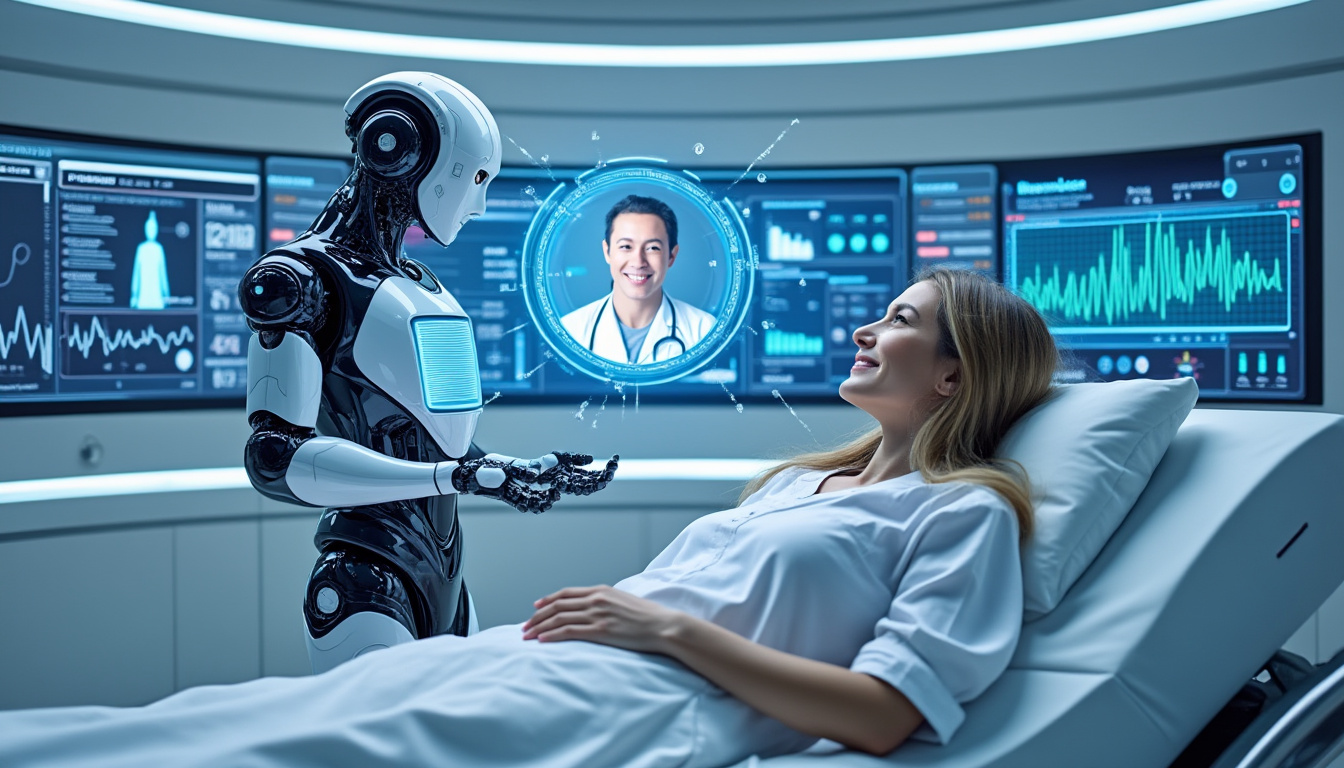
One significant application of AI in healthcare is through virtual care teams. With healthcare becoming increasingly digital, many patients rely on telemedicine services for guidance. However, the challenge remains in scalability and affordability. By leveraging patient data analytics, new AI virtual care models will be able to analyze millions of previous patient interactions, producing outcomes that mirror human clinicians’ expertise at a fraction of the cost.
These AI-powered care teams can drastically enhance the quality of healthcare delivered remotely. By training on real-world interactions, they develop accurate decision-making protocols that can lead to effective acute diagnoses and recommendations. The healthcare industry is at a pivotal moment where AI technology is expected to revolutionize patient experience.
Improving Chronic Disease Management
Another promising area for AI applications involves chronic disease management. Effective management of chronic conditions such as diabetes or hypertension remains a significant challenge, often leading to life-threatening complications. AI-driven health agents, utilizing knowledge from generative models, can provide continuous support and real-time monitoring through home-based technology.
Imagine an AI that can connect with wearable devices to track critical health indicators in real-time, alerting both patients and clinicians to any concerning changes before they escalate. By preparing for potential complications early, healthcare professionals can effectively reduce hospital admissions and emergency room visits.
The Future of Healthcare: Enhanced Accessibility and Personalized Care
The advancements made by DeepSeek in healthcare present a tremendous opportunity to increase accessibility. As AI adoption expands, the costs associated with health services could be significantly reduced, ensuring that high-quality medical guidance becomes available to more individuals, regardless of their socioeconomic status.
The Economic and Social Impact of AI in Healthcare
Improving outcomes in chronic disease management is not merely an operational concern; it is a societal necessity. Many Americans face barriers in accessing appropriate care due to the prohibitive costs and lack of resources. With deep learning applications in medicine, it becomes feasible to develop solutions that bridge these gaps. AI’s potential to transform healthcare goes beyond mere convenience; it represents a model that prioritizes equity in the distribution of health resources and technologies.
As virtual healthcare services become mainstream, many patients will experience lower healthcare expenses and better overall health, as these innovations in technology will enhance the ability to manage complex medical conditions. This will lead to a healthier population that requires fewer emergency medical interventions.
The Path Forward: Who Will Lead the Initiative?
With the introduction of DeepSeek and its innovative approaches to transforming healthcare, the question remains: Who will take the lead in harnessing these technologies? Investment in deep learning applications in medicine will necessitate a collaborative effort across the industry, including startups, established healthcare providers, and tech companies alike. Emphasizing partnership will be crucial to maximizing the use of HealthTech Innovations that the current market offers.
| Innovation | Impact on Healthcare | Example Applications |
|---|---|---|
| Knowledge Distillation | Accelerates development of specialized AI | AI virtual care teams, chronic disease management programs |
| Mixture of Experts | Reduces energy consumption and improves efficiency | Targeted AI solutions for specific medical fields |
| Mathematical Compression | Optimizes data processing for better accuracy | Real-time patient monitoring applications |
Healthcare is entering a new phase, where specially tailored AI applications prepare us for personalized care and improved health outcomes. The advent of open-source technologies such as DeepSeek’s models will pave the way for a future where medical professionals and companies can collaborate to enhance the quality of care available, ultimately creating a healthier population.