

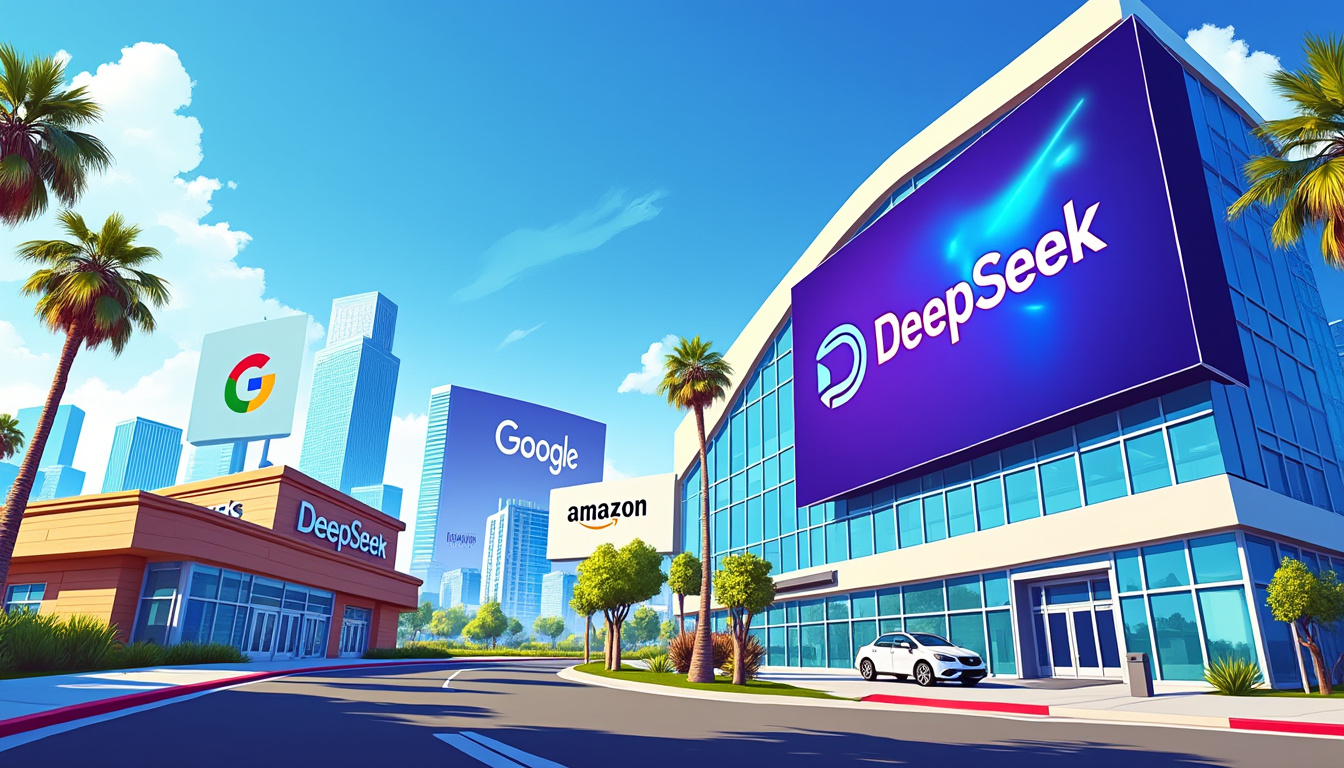
DeepSeek has emerged as a transformative force shaking the foundations of Silicon Valley. The stark contrast between DeepSeek‘s open-source approach and the closed ecosystems of traditional tech giants has left an indelible mark on the industry. Major players are scrambling to adapt as DeepSeek redefines strategies, potentially altering the power dynamics within the tech realm. The ramifications of this shift are far-reaching, affecting not just investment but also innovation pipelines. Key to understanding this phenomenon is the observation of how a single entity can challenge a multi-billion-dollar industry. The reverberations can be felt globally, as this narrative unfolds.
Understanding DeepSeek’s Emergence in Silicon Valley
The launch of DeepSeek has caught many off guard. A company with robust support from the Chinese government, DeepSeek has disrupted what was once considered an unassailable territory of US tech giants. Its rise is not merely a story of rapid growth; it encapsulates an awakening in the industry. Established companies, including Nvidia and OpenAI, are reassessing their positions as they face a competitor that can offer advanced AI technologies at significantly lower costs.
Considered as a paradox, DeepSeek’s open-source model allows a wider access to sophisticated AI tools, undermining the notion that proprietary software is necessary to maintain quality and security. The cost-effective nature of DeepSeek’s offerings stands against the prevailing belief that top-notch technology comes with a hefty price tag. This has ignited a sense of urgency among Silicon Valley investors and innovators alike, prompting discussions about recalibrating their business models.
A Glimpse Into DeepSeek’s Technology
DeepSeek’s technology leverages advanced machine learning algorithms that rival those of established players. A significant feature is its adaptability; the system learns from real-time data, making it a powerful tool for various industries. This adaptability is particularly appealing to startups in Silicon Valley looking to harness AI without the overwhelming financial burden.
Equally important is DeepSeek’s ability to create finely tuned AI models. Startups often grapple with resource constraints, and the existence of a potent tool that democratizes access to AI is a game-changer. This development not only fosters competition but also stimulates creativity, allowing entrepreneurs to experiment without a fear of excessive capital loss.
The Economic Ramifications of DeepSeek’s Rise
The economics of Silicon Valley are at risk of being transformed due to DeepSeek’s disruptive entry. Leading firms have reported substantial losses in market cap, with Nvidia alone facing a staggering drop of $600 billion in one day. This startling shift speaks volumes about the fragility of technological dominance in the face of emerging competitors. Investors are likely to reconsider the sustainability of their portfolios; the need for agility in strategy has never been more pronounced.
Typically, large-scale AI projects require significant investments. However, DeepSeek is changing this narrative. Offering robust models at accessible prices, the company is leading a new wave of financial possibilities for tech firms. This shift is reflected in investment trends, where venture capital is now showing interest in startups willing to adopt open-source software solutions, supporting a trend that prioritizes flexibility and adaptability.
The Response of Established Players
The response from established players has been a mixture of skepticism, intrigue, and effort to counteract the new threat. For instance, companies like OpenAI and Google are investing heavily in research and development to fortify their own offerings. There is an ongoing dialogue within the tech industry about whether to adapt by adopting more flexible business models akin to those of DeepSeek.
Furthermore, the regulatory landscape is being watched closely. As companies hasten to implement defense strategies, concerns arise over ethics and compliance. Much of the industry’s credibility relies on how it navigates these challenges, as the nuances of technology and governance become increasingly interlinked across international borders.
Innovation Boosts from Competition
Competition is a driving force for innovation, and DeepSeek’s rise is no exception. By creating an environment where traditional tech companies must innovate or risk losing market share, DeepSeek has ignited a frenzy of creativity among developers and engineers. Each day, we see new ideas being put forth by teams seeking to showcase their agility in response to shifting industry standards.
This innovation cycle highlights not just a short-term gain for startups but promises significant long-term benefits for consumers across various sectors. The more options available in the market, the better products we are likely to encounter. This delight for consumers is magnified in fields such as healthcare, finance, and education, where AI is set to intervene drastically.
Case Studies on Emerging Startups
To illustrate the innovation boom promoted by DeepSeek’s emergence, one can look at startups that have leveraged its technology to develop competitive products. For instance, many health tech firms are utilizing DeepSeek’s machine learning capabilities to create predictive models that enhance patient outcomes.
As these startups flourish, they provide direct evidence of the benefits of open-source frameworks. Investors are keenly watching how these companies capitalize on the flexibility and efficiency of DeepSeek, which ultimately makes a compelling case for more funding into open-source initiatives. Herein lies a lesson for tech companies: collaboration and open platforms can yield unprecedented results.
Challenges and Risks of Open-Source AI
While DeepSeek presents many exciting opportunities, it also brings with it a set of challenges. Companies venturing into the realm of open-source AI must be wary of intellectual property issues and the cybersecurity risks associated with widespread access to technology. Unlike the traditional models that emphasize security through exclusivity, open-source environments can become vulnerable.
Moreover, the inverse correlation between the proliferation of AI technologies and regulatory compliance raises questions about the governance of AI. This balance is critical as sectors across the globe respond to the dual pressures of innovation and containment of risks involving data privacy and ethical practices.

The Future of AI in Silicon Valley
The future of AI in Silicon Valley is poised for a transformation influenced heavily by DeepSeek’s strategies. Increasingly, we can expect to witness a blend of traditional approaches alongside newfound adaptability ushered in by competition. The landscape will demand that each firm not only plays to its strengths but also recognizes the need to incorporate external innovations.
Observing the developments will be crucial for industry stakeholders, as they adapt their offerings to reflect the diverse needs of a rapidly evolving market. Consumer feedback will notably shape product development cycles, presenting a real-time gauge for tech companies to meet market demands effectively.
Community Response to DeepSeek
The tech community has provided an array of responses to DeepSeek that highlights the contrasting philosophies around innovation. As the conversation unfolds, many view DeepSeek as a beacon of hope for democratization in technology, while others express concern about potential chaos from unregulated access. The balance will ultimately rely on how the community supports and shapes the ongoing evolution of AI.
Collaborative projects and forums have surfaced, indicating an eagerness among developers to contribute to collective knowledge while ensuring ethical considerations are at the forefront. The ongoing dialogues point to the possibility that through collective effort, a stable yet dynamic environment can emerge, fostering advancement without losing sight of responsibility.
Looking Ahead: A Balanced Approach
Moving forward, the notion of balance will dominate discussions in Silicon Valley. Stakeholders will engage in conversations stressing the need for structured frameworks that not only allow competition but also protect innovation integrity. Multi-national corporations will need to harness insights from emerging players like DeepSeek while nurturing a culture that values both creativity and ethical responsibility.
Ultimately, how Silicon Valley embraces the challenges posed by DeepSeek will define the future trajectory of AI in this iconic tech hub. With the evolution still unfolding, the industry finds itself at a pivotal crossroads that may set new standards for years to come.